What Is Credit Card Debt and How to Avoid the Interest Trap
Take control of your money. Learn how to manage debt, what is credit debt and discover proven tips to save money and pay off debt.
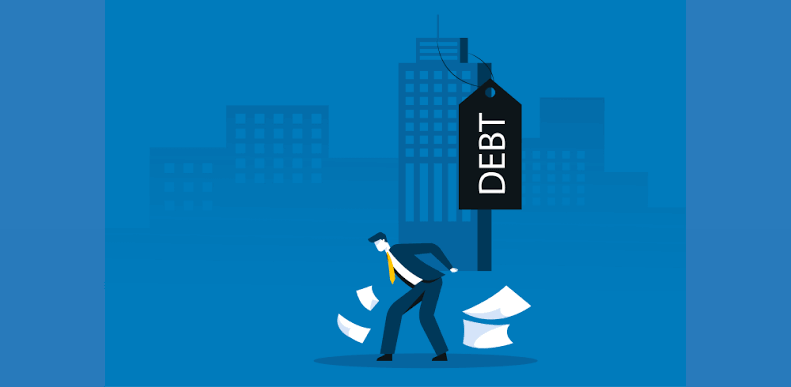
Debt is the single greatest threat to long-term wealth accumulation in the modern financial system. While often portrayed as a neutral tool, the reality is that most forms of consumer debt function as a regressive tax on future income—one that disproportionately affects those who can least afford it. Understanding the mechanics of borrowing, the true cost of interest, and the psychological drivers of over-leverage is essential for anyone seeking financial independence. This comprehensive guide dissects the nature of credit debt, explores its systemic impact on wealth building, and provides a rigorous framework for elimination and prevention.
The average American household carries over $10,000 in credit card balances, paying an average annual percentage rate (APR) exceeding 22%. At that rate, what is credit debt in practical terms? It is a financial anchor that compounds against you—earning interest on interest in the exact opposite direction of investment growth. Every dollar spent on interest is a dollar that cannot be deployed into index funds, real estate, or any other wealth-building vehicle.
What Is Credit Debt? A Comprehensive Definition
Before developing a strategy to defeat debt, one must understand its anatomy. At its core, what is credit debt? It is a liability incurred when an individual borrows money from a financial institution or lender with the promise to repay the principal plus interest over a specified period. Unlike mortgage debt, which is secured by an appreciating asset (real estate), credit card debt is typically unsecured—meaning there is no collateral backing the loan. This lack of collateral is precisely why interest rates on credit cards are substantially higher than those on mortgages or auto loans.
Credit debt manifests in several forms: revolving credit (credit cards), installment loans (personal loans, student loans), and lines of credit. Revolving credit is particularly dangerous because it encourages perpetual borrowing—minimum payments are designed to extend the repayment period indefinitely, maximizing interest income for the issuer. When consumers ask what is credit debt in behavioral terms, the answer is often "a trap disguised as convenience."
The Compounding Effect of Negative Interest
Just as compound interest accelerates wealth growth for investors, compound interest on debt accelerates financial decline for borrowers. Consider a $5,000 credit card balance at 22% APR with a minimum payment of 2% of the balance. It would take over 20 years to repay that balance, and the total interest paid would exceed $7,000—more than the original principal. This is the dark mirror of index fund compound interest: instead of earning returns on returns, you are paying interest on interest. The mathematical asymmetry is stark, and it explains why debt is the primary obstacle to building net worth for millions of households.
The Systemic Anatomy of Consumer Debt
To defeat debt, you must understand how the system is engineered to keep you trapped. Credit card issuers are sophisticated behavioral economists. They design minimum payments to be deceptively low—often just 1-3% of the outstanding balance—which creates the illusion of affordability while ensuring that the principal barely declines. The minimum payment structure is a psychological anchor: consumers see a small number and feel they are making progress, when in reality, they are merely servicing interest.
- Pays full statement balance: Never carries a balance, avoids interest entirely.
- Views credit as a tool: Uses cards for rewards and purchase protection, not as a funding source.
- Maintains emergency fund: Has 3-6 months of expenses in liquid savings to avoid high-interest borrowing.
- Treats interest as a red flag: Any recurring interest charge triggers immediate budget re-evaluation.
- Pays only minimum: Extends repayment indefinitely, maximizing interest paid.
- Views credit as income: Treats available credit as extra spending power.
- No emergency buffer: Relies on credit cards for unexpected expenses, compounding the problem.
- Normalizes interest: Accepts interest charges as a "cost of life," never questioning them.
The True Cost of Debt: Beyond the Interest Rate
When evaluating debt, most consumers focus exclusively on the APR. This is a mistake. The true cost of debt extends far beyond the nominal interest rate to include opportunity cost, psychological burden, and constrained financial flexibility. Every dollar allocated to servicing debt is a dollar that cannot be invested in appreciating assets. A $500 monthly payment on credit card debt might seem manageable, but if that $500 were invested monthly into an S&P 500 index fund at a 9% historical average return, it would grow to over $1,000,000 in 30 years. This is the opportunity cost of debt—the invisible toll it takes on your future net worth.
Additionally, high levels of debt constrain your ability to take calculated risks. Entrepreneurs often require capital to start businesses; homeowners need credit for mortgages. When your credit utilization ratio is high and your debt-to-income ratio is elevated, you are effectively shut out of the credit market at favorable terms. The paradox is that those who need credit most—those with the lowest net worth—are often the ones paying the highest rates, perpetuating a cycle of poverty that is exceedingly difficult to break.
Quantitative Analysis: Debt Repayment vs. Investment
The decision to accelerate debt repayment versus investing extra cash is one of the most consequential financial choices a household can make. The mathematically optimal approach is to compare the guaranteed after-tax return of debt repayment (the interest rate you avoid) against the expected return of investing. Credit card debt at 22% is a guaranteed 22% after-tax return on every dollar repaid. No investment in history has ever delivered a guaranteed 22% annualized return. Therefore, all high-interest debt should be repaid before any taxable investing.
| Debt Type | Average APR | Effective Guaranteed Return on Repayment | Recommended Priority |
|---|---|---|---|
| Credit Card Debt | 22% - 28% | 22% - 28% | Highest Priority (Emergency Level) |
| Personal Loans | 10% - 18% | 10% - 18% | High Priority |
| Auto Loans | 6% - 9% | 6% - 9% | Medium Priority |
| Federal Student Loans | 4% - 6% | 4% - 6% | Low Priority (Consider Investing) |
| Mortgage | 6% - 7% | 6% - 7% | Lowest Priority (Tax-Deductible) |
The table above clarifies the prioritization framework. Credit card debt is a financial emergency that demands immediate and aggressive action. The 22% guaranteed return on repayment is superior to any investment available in the public markets. Conversely, a 30-year fixed mortgage at 6% is a relatively low-cost form of leverage, especially considering the mortgage interest deduction and the historical appreciation of real estate. For those with student loan debt below 5%, the calculus shifts: it may be more advantageous to invest surplus cash in an S&P 500 index fund (historical 9% return) rather than aggressively prepaying low-interest debt.
The Snowball vs. Avalanche Methods: A Strategic Framework
Once you have committed to eliminating debt, you must select a repayment strategy. The two dominant approaches are the debt snowball (popularized by Dave Ramsey) and the debt avalanche (mathematically optimal). The avalanche method prioritizes repaying the debt with the highest interest rate first, minimizing total interest paid. The snowball method prioritizes repaying the smallest balance first, providing psychological momentum and quick wins. While the avalanche is mathematically superior, the snowball has demonstrated behavioral efficacy for individuals who struggle with motivation.
To execute the avalanche method, list all your debts from highest APR to lowest. Make minimum payments on all debts, then direct every additional dollar toward the highest-interest debt until it is eliminated. Roll that payment into the next highest-interest debt. This approach minimizes the total interest paid and accelerates the timeline to becoming debt-free. For example, tackling a 24% credit card before a 6% car loan can save thousands of dollars in interest over the repayment period.
For the average household, a hybrid approach often works best: use the avalanche method for high-interest debt (anything above 10%) and the snowball method for smaller, low-interest balances that can be eliminated quickly for psychological reinforcement. The key is to maintain momentum. Debt repayment is a marathon, not a sprint, and behavioral consistency is more important than mathematical perfection.
Preventing Future Debt: The Emergency Fund Imperative
The most effective strategy for debt prevention is the establishment of a robust emergency fund. The primary reason consumers accrue credit card debt is unexpected expenses—car repairs, medical bills, job loss—that exceed available cash reserves. Without an emergency fund, these inevitable events force borrowing at punitive rates. A fully funded emergency reserve of 3-6 months of living expenses acts as a buffer against the need for high-interest borrowing.
For example, a $1,000 car repair is a financial nuisance if you have cash; it becomes a debt spiral if charged to a 24% APR credit card. The emergency fund effectively provides a 24% "return" by preventing the need to borrow. This is why financial planners universally recommend prioritizing the emergency fund before aggressive debt repayment beyond minimums—otherwise, a single unexpected expense can undo months of progress and re-establish the debt cycle.
Behavioral Psychology: The Emotional Cost of Debt
Understanding what is credit debt from a psychological perspective is just as important as understanding its mathematical structure. Chronic debt is associated with elevated cortisol levels, anxiety disorders, and relationship stress. The constant background hum of financial obligation impairs cognitive function, making it harder to make sound decisions about spending, saving, and investing. This is the "financial scarcity" mindset—when you are focused on making ends meet, your mental bandwidth for long-term planning is severely diminished.
Breaking free from debt is therefore as much a psychological victory as a financial one. The act of eliminating a credit card balance or paying off a personal loan provides a dopamine release that reinforces positive financial behavior. This is why the debt snowball method, despite its mathematical inefficiency, has helped millions of people escape debt—the emotional reward of "small wins" keeps them motivated through the arduous repayment process. Financial independence is not just about net worth; it is about the peace of mind that comes from owning your income instead of surrendering it to lenders.
Leveraging Low-Interest Debt for Wealth Building
Not all debt is destructive. The distinction between "good" debt (used to acquire appreciating assets) and "bad" debt (used to finance consumption) is critical for wealth accumulation. A mortgage on a primary residence, when fixed at a low rate, can be a powerful inflation hedge. Similarly, student loan debt that funds a high-earning degree can be considered an investment in human capital, provided the return on that investment (the salary premium) exceeds the cost of the loan.
The prudent investor uses low-interest debt to maintain liquidity and continue investing in higher-return assets. For example, if you have a 3% mortgage and could pay it off early, the mathematically superior move is to invest the extra cash in a diversified equity portfolio expected to return 8-10% annually. The spread between the cost of debt (3%) and the return on investment (8%) is a positive arbitrage opportunity that accelerates net worth growth. However, this strategy requires discipline—the invested funds must genuinely be deployed into appreciating assets, not spent on discretionary consumption.
The key to using debt as a wealth-building tool is the arbitrage spread. If your cost of debt (interest rate after tax deductions) is lower than your expected investment return, you should generally invest rather than repay early. For example, a 4% student loan vs. a 9% expected index fund return creates a 5% positive spread. Over 20 years, that spread can add hundreds of thousands of dollars to your net worth. Always run the numbers before making a lump-sum debt repayment decision.
Debt Consolidation and Refinancing: A Tactical Toolkit
For those currently trapped in high-interest debt, consolidation and refinancing can be powerful tactical tools. Balance transfer credit cards offer 0% APR introductory periods (typically 12-21 months) on transferred balances. This effectively pauses the compounding interest, allowing you to attack the principal without the erosion of interest charges. The key caveat is the balance transfer fee (typically 3-5%), which must be factored into the cost-benefit analysis. If you can pay off the transferred balance within the promotional period, the fee is worthwhile compared to months of 22% APR.
Similarly, personal loans from credit unions or peer-to-peer platforms often offer rates significantly below credit card APRs (10-15% vs. 22-28%). While not as dramatic as a 0% offer, a consolidation loan can reduce your monthly payment and simplify multiple debt obligations into a single, manageable installment. The danger of consolidation is behavioral: if you consolidate credit card debt and then run up the cards again, you have doubled your debt burden. Consolidation must be paired with a commitment to stop using credit cards for discretionary spending.
Conclusion: The Path to Debt-Free Wealth
Understanding what is credit debt is the first step toward defeating it. High-interest debt is a systematic wealth transfer from the consumer to the financial institution—a reverse compounding effect that undermines every dollar you save. The path to financial freedom requires a ruthless prioritization of debt elimination, particularly credit card balances, followed by the establishment of an emergency fund and the disciplined deployment of surplus cash into appreciating assets like index funds. By adopting the avalanche method, avoiding the minimum payment trap, and viewing debt as an emergency rather than a convenience, you can redirect your cash flow toward building lasting wealth.
Remember, every dollar of interest you pay is a dollar that will never compound for your retirement. The choice between being a borrower and being an investor is the defining financial decision of your life. Choose wisely, start today, and watch your net worth grow.
Visualize Your Debt-Free Future
Use our free compound interest calculator to model the impact of redirecting your debt payments into investments. See exactly how much faster you can reach your retirement goals by eliminating high-interest debt first.
Calculate Your Wealth Potential