Compound Interest Investing: How to Grow Your Money Exponentially
Grow your wealth. Learn how to invest in investing compound, compound interestr, index fund compound interest and understand the basics of long-term wea...
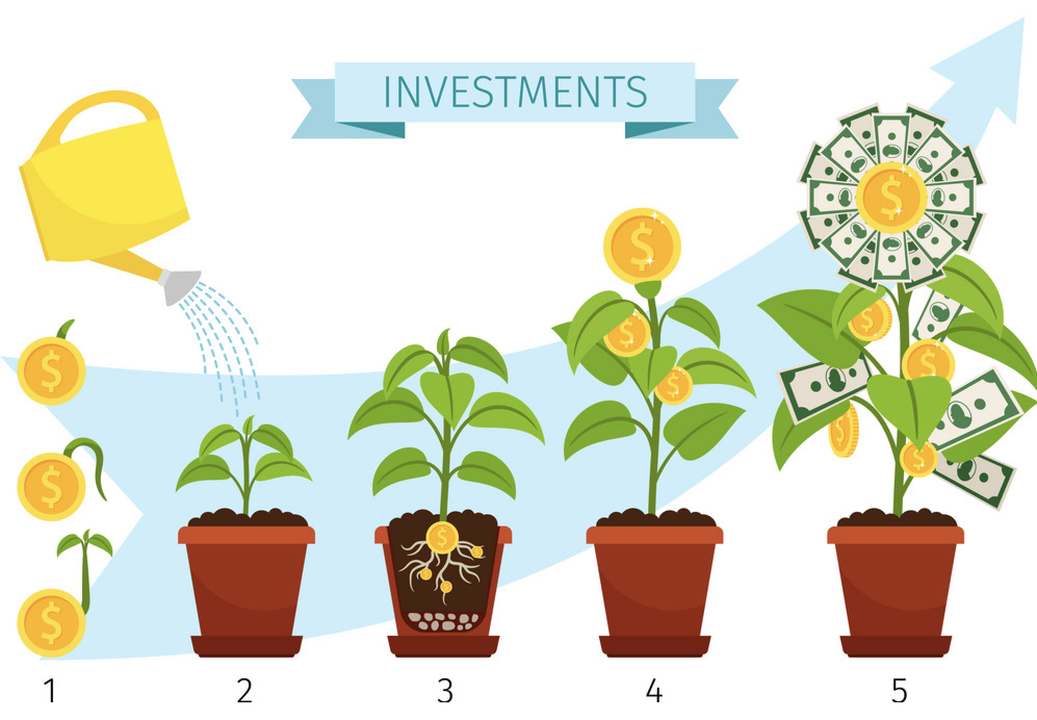
The difference between building dynastic wealth and retiring with modest savings often comes down to a single, underutilized force: investing compound returns. While many understand the basic definition of compound interest, few investors truly internalize its exponential power or actively structure their portfolios to maximize it. In this comprehensive guide, we will dissect the mathematics of compound interest, compare the most effective vehicles for long-term growth (including index funds), and provide actionable strategies to ensure your capital works as hard as you do.
Albert Einstein reportedly called compound interest the “eighth wonder of the world.” Whether apocryphal or not, the principle holds: He who understands it, earns it; he who doesn't, pays it. In the context of investing, compound interestr (the process of earning returns on previous returns) transforms patience into a geometric multiplier of wealth.
What Is Compound Interest and Why Does It Dominate Long-Term Investing?
At its core, compound interest is interest calculated on the initial principal, which also includes all of the accumulated interest from previous periods on a deposit or loan. Think of it as “interest on interest.” Unlike simple interest, which grows linearly, compound interest grows exponentially. For the wealth builder, this means that the longer your time horizon, the more dramatic the final outcome. The key variables are the principal amount, the annual rate of return, the compounding frequency (daily, monthly, or annually), and—most critically—time.
For an investor focusing on investing compound strategies, the goal is to never interrupt the compounding cycle. Withdrawing earnings breaks the exponential curve. The most successful long-term investors treat their portfolios like a bar of wet soap: the more you handle it (trade it, move it, or cash it out), the smaller it gets. Instead, they lock in a disciplined strategy, often using vehicles like index funds, to let the mathematical machinery of compounding run uninterrupted for decades.
The Mathematical Reality: Linear vs. Exponential Growth
To appreciate the power of compound interestr, consider a simple comparison. Investor A earns a one-time return of 10% on $10,000, then spends the profit. Investor B reinvests the 10% profit and repeats the process. After 20 years of 10% average annual returns with reinvestment, Investor B does not have $20,000—they have over $67,000. The difference of $47,000 is purely the result of compounding. This exponential acceleration is why starting early—even with smaller amounts—almost always beats starting late with larger contributions.
The Perfect Vehicle: Index Fund Compound Interest
While many assets generate returns, few are as reliable for long-term compounding as the low-cost index fund. Index fund compound interest is not interest in the traditional bond sense; rather, it is the effect of reinvested dividends and capital appreciation over time. An index fund tracking the S&P 500, for example, allows an investor to own a slice of 500 of America’s largest companies. When those companies earn profits, they distribute dividends. By automatically reinvesting those dividends to buy more shares of the index fund, the investor effectively increases their ownership stake without lifting a finger.
Over a 30-year horizon, the difference between a low-cost index fund and an actively managed mutual fund (with high expense ratios) can reach hundreds of thousands of dollars, entirely due to the compounding drag of fees. A 1% fee might not sound like much, but over 40 years, it eats nearly 30% of your potential ending balance. That is the dark side of compounding—fees and taxes compound just as viciously as returns.
- Low-Cost Index Funds: Expense ratios below 0.10% keep more capital working for you.
- Dividend Reinvestment (DRIP): Automatically converts distributions into new shares.
- Tax-Advantaged Accounts: IRAs or 401(k)s allow tax-free or tax-deferred compounding.
- Decade-Long Holding Periods: Zero portfolio turnover eliminates short-term capital gains taxes.
- High Management Fees: 1.5% annual fees reduce your terminal wealth by over 30% in 40 years.
- Frequent Trading: Realizing gains resets the tax base and interrupts the curve.
- Cash Drag: Holding large idle cash positions yields 0% real return, decaying against inflation.
- Emotional Selling: Selling during downturns locks in losses and misses the subsequent recovery.
Quantitative Analysis: Compounding Rates and Time Horizons
To make informed decisions, an investor must visualize the relationship between time, contribution rate, and return. The table below illustrates the future value of a $10,000 initial investment with a monthly contribution of $500, across different average annual returns and time periods. Notice how the gap between a 6% return (typical balanced portfolio) and a 9% return (typical S&P 500 long-term average) becomes massive after 30 years.
| Investment Horizon | Average Annual Return | Monthly Contribution | Estimated Final Value |
|---|---|---|---|
| 10 Years | 6% (Conservative) | $500 | ~$98,000 |
| 10 Years | 9% (Index Fund Avg) | $500 | ~$135,000 |
| 20 Years | 6% (Conservative) | $500 | ~$258,000 |
| 20 Years | 9% (Index Fund Avg) | $500 | ~$430,000 |
| 30 Years | 6% (Conservative) | $500 | ~$572,000 |
| 30 Years | 9% (Index Fund Avg) | $500 | $1,021,000+ |
The data is unambiguous: targeting index fund returns (via broad market ETFs) and maintaining a 30-year discipline is the most reliable path to millionaire status for the average wage earner. Note that the 9% column crosses the seven-figure threshold, while the 6% column remains below $600,000. That $400,000 difference is the premium paid for smart asset allocation and resisting the urge to chase “safe” but low-yielding investments like money market funds over long periods.
The Step-by-Step Mechanics of Hyper-Compounding
To harness investing compound returns effectively, you must follow a structured, almost mechanical process. Emotional decisions are the enemy of exponential growth. Here is the four-step framework used by disciplined accumulators.
Step 1: Automate Your Savings Rate
You cannot compound what you do not save. The first rule is to “pay yourself first.” Set up an automatic monthly transfer from your checking account to your investment brokerage or retirement account. The exact percentage (15-25% of gross income is a gold standard) matters less than the consistency. Automation removes willpower from the equation. Over time, your lifestyle adjusts to the reduced cash flow, but the compounding engine runs relentlessly in the background.
Step 2: Optimize the Compounding Frequency
While annual compounding is standard, many high-yield savings accounts and bond funds compound daily or monthly. For equities (stocks/index funds), the compounding is effectively continuous because prices update in real-time. However, the most practical way to increase frequency for an index fund investor is to reinvest dividends immediately. Do not let dividends go to a cash sweep account. Enable DRIP (Dividend Reinvestment Plan) on your brokerage platform. This converts the 1.5-2% annual dividend yield of the S&P 500 into additional fractional shares, which themselves generate future dividends.
Step 3: Tax Efficiency Is Force Multiplication
The government is a silent partner in your investment returns. If you are compounding in a taxable brokerage account, you lose a portion of your gains each year to capital gains taxes and dividend taxes. To maximize investing compound returns, prioritize tax-advantaged vehicles. A Roth IRA is the holy grail of compounding: you contribute after-tax dollars, but the money grows completely tax-free, and qualified withdrawals are tax-free. A traditional 401(k) offers tax-deferred growth (you pay ordinary income tax upon withdrawal), but the deferral allows your full pre-tax dollars to compound. For most long-term investors, maxing out a Roth IRA and a 401(k) match is the optimal first step before using a taxable account.
The Impact of Inflation on Real Compounding
One cannot discuss compound interestr without addressing inflation. The nominal return (what you see on your statement) is not the full story. The real return is nominal return minus the inflation rate. If you earn 5% in a bond fund but inflation runs at 3%, your real compounding rate is only 2%. Over 20 years, that 2% real return is much weaker than a 9% nominal equity return with 3% inflation (6% real). This is why index funds, which own productive companies that can raise prices to match inflation, are superior for long-term real wealth preservation compared to fixed-income assets.
Historically, the S&P 500 has returned about 10% nominal and 7% real (after inflation). Money market accounts or CDs, while “safe,” rarely beat inflation after taxes. Therefore, any strategy focused on index fund compound interest implicitly acknowledges that volatility is the price of achieving positive real returns. You must tolerate 15-20% drawdowns every few years to capture the 7% real annualized return over decades. The investor who switches to cash during a crash locks in the loss and misses the subsequent rebound, permanently crippling their compounding curve.
The Rule of 72 is a shortcut to estimate how long it takes to double your money. Divide 72 by your annual return. At 6% return, you double every 12 years. At 9% return (index funds), you double every 8 years. This means a 25-year-old investing $50,000 in an S&P 500 index fund could see it double at age 33 ($100k), again at 41 ($200k), again at 49 ($400k), and again at 57 ($800k). That is the raw power of investing compound returns without any additional contributions.
Behavioral Pitfalls That Break the Compounding Engine
Knowledge of mathematics is useless without the discipline to apply it. The financial industry is structured to interrupt your compounding—through advice fees, fund switching, and market timing narratives. Below is a comparison of the successful compounder versus the typical retail trader.
- Time Horizon: 20+ years, ignores daily news.
- Reaction to Crash: Buys more shares via automated monthly contributions.
- Portfolio Review: Quarterly or annual rebalancing only.
- Fee Awareness: Pays less than 0.20% in total expense ratios.
- Time Horizon: Weeks or months, chases “hot stocks.”
- Reaction to Crash: Panic sells at the bottom, misses recovery.
- Portfolio Review: Daily checking, emotional decision making.
- Fee Awareness: Pays high commissions, expense ratios >1%, and short-term capital gains taxes.
Building a Real-World Portfolio for Maximum Compounding
To translate theory into practice, a specific asset allocation is necessary. A core-satellite portfolio works best for harnessing index fund compound interest while allowing for minor tactical tilts. The foundation (80-90% of assets) should be a low-cost total market fund. For US investors, VTI (Vanguard Total Stock Market ETF) or VOO (Vanguard S&P 500 ETF) are excellent choices. For international diversification, VXUS (total international stock) provides exposure to non-US compounding engines. The remaining 10-20% can be allocated to a small-cap value fund (like AVUV) or a long-term treasury ETF (like VGLT) for a potential volatility hedge, though for pure compounding, many experts advocate 100% equities for any horizon exceeding 15 years.
The most critical action is starting today. A 24-year-old who invests $6,000 annually into an S&P 500 index fund until age 64 will accumulate approximately $2.2 million (assuming 9% nominal returns). A 34-year-old who invests the same $6,000 annually will have only $850,000. That ten-year delay cost $1.35 million in potential wealth. Time is the only non-renewable resource in investing. You can earn more money, but you cannot earn back lost decades of compound interestr.
Model Your Path to Exponential Wealth
Stop guessing how long it will take to reach your financial goals. Use our free, interactive compound interest calculator to input your starting principal, monthly contributions, and expected rate of return. Visualize the exact curve of your future net worth and see the impact of increasing your savings rate by just 5%.
Launch the Calculator NowConclusion: The Unfair Advantage of the Patient Investor
The mathematics of investing compound returns creates an almost unfair advantage for those who start early and do nothing. You do not need to pick winning stocks, time the market, or take reckless risks. You simply need to buy a broad market index fund, enable dividend reinvestment, automate your contributions, and ignore the noise. The difference between a comfortable retirement and a wealthy one is rarely income level; it is the number of uninterrupted compounding cycles you allow your capital to complete. By prioritizing low-cost index funds and understanding the exponential function, you turn time from an enemy (of your labor) into an ally (of your capital). Let the machinery of capitalism work for you. Start today, automate everything, and check back in thirty years.